Classic Leather Belt
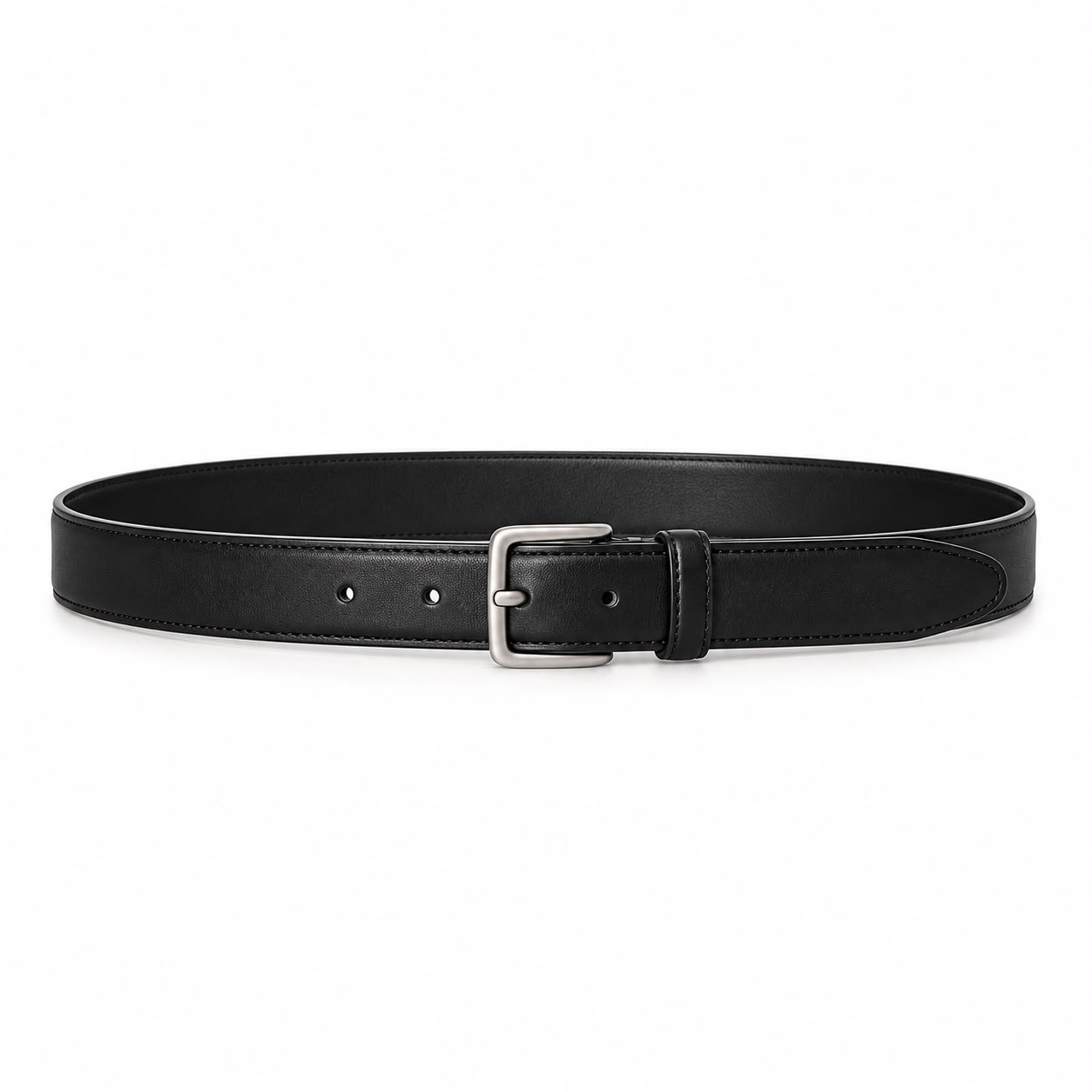
A classic black leather belt featuring a silver-tone single-prong metal buckle, matching leather keeper loop, and tonal edge stitching.
The same factories that produce for houses like Celine and Balenciaga can produce this piece, directly to you
GABI
Make it yours
Colour
- Main Fabric: 100% Leather, 1200gsm
- Hardware: 100% Zinc Alloy
A belt is one strip of leather and a buckle, which is why every shortcut shows. The leather, the edge finish and how the buckle is attached decide whether it lasts a season or many years.
Simple, so every detail counts
A belt has almost no construction to hide behind. Full-grain leather ages and softens; bonded or split leather cracks and peels at the holes and buckle fold. Width, hole spacing and buckle style set whether it reads casual or dress.
Construction logic
Belts are cut from a strap of hide, the edges bevelled, painted or burnished, and the buckle fixed by stitching, rivets or screws. Holes are punched evenly, and a keeper loop holds the tail. Stitched or layered belts need even, tight stitching along the full length.
Commercial logic for creators
Belts are a low-risk leather add-on: little hide, simple sizing by waist length, and a buckle that can carry a brand. A screw-fixed buckle lets one strap take different buckles.
FAQ
Store it hung or loosely rolled, keep it dry, and condition the leather occasionally.
Use LWG-rated tanneries where possible and keep nickel-release testing for buckles and restricted-substance testing on file. Leather belts usually fall under HS 4203; confirm per item.
A branded buckle, an embossed logo on the inside or near the tip, or laser engraving on the buckle.
Width, length per size, leather type and thickness, edge finish, buckle spec, hole spacing and logo placement.
Affordable uses bonded or split leather; premium uses full-grain leather with painted edges; luxury uses fine leather, burnished edges and solid metal buckles.
Cracking at the holes, peeling edge paint, buckles that loosen, uneven holes and colour rubbing onto clothing.
Buckle pull strength, rub and colourfastness, edge durability and checks for cracking at the holes after flexing.
Leather grade and thickness, buckle material and finish, edge finishing method and stitching.
By waist size, measured from the buckle fold to the middle hole. Offer a range of sizes, usually with five holes for adjustment.
Edge finish, even hole punching, a secure buckle attachment, and tidy stitching on layered or stitched belts.
Full-grain cowhide for strength and ageing; avoid bonded leather, which cracks at the holes and buckle fold.
A strap of leather with a buckle and keeper, worn at the waist, in widths and styles from slim dress belts to wider casual belts.