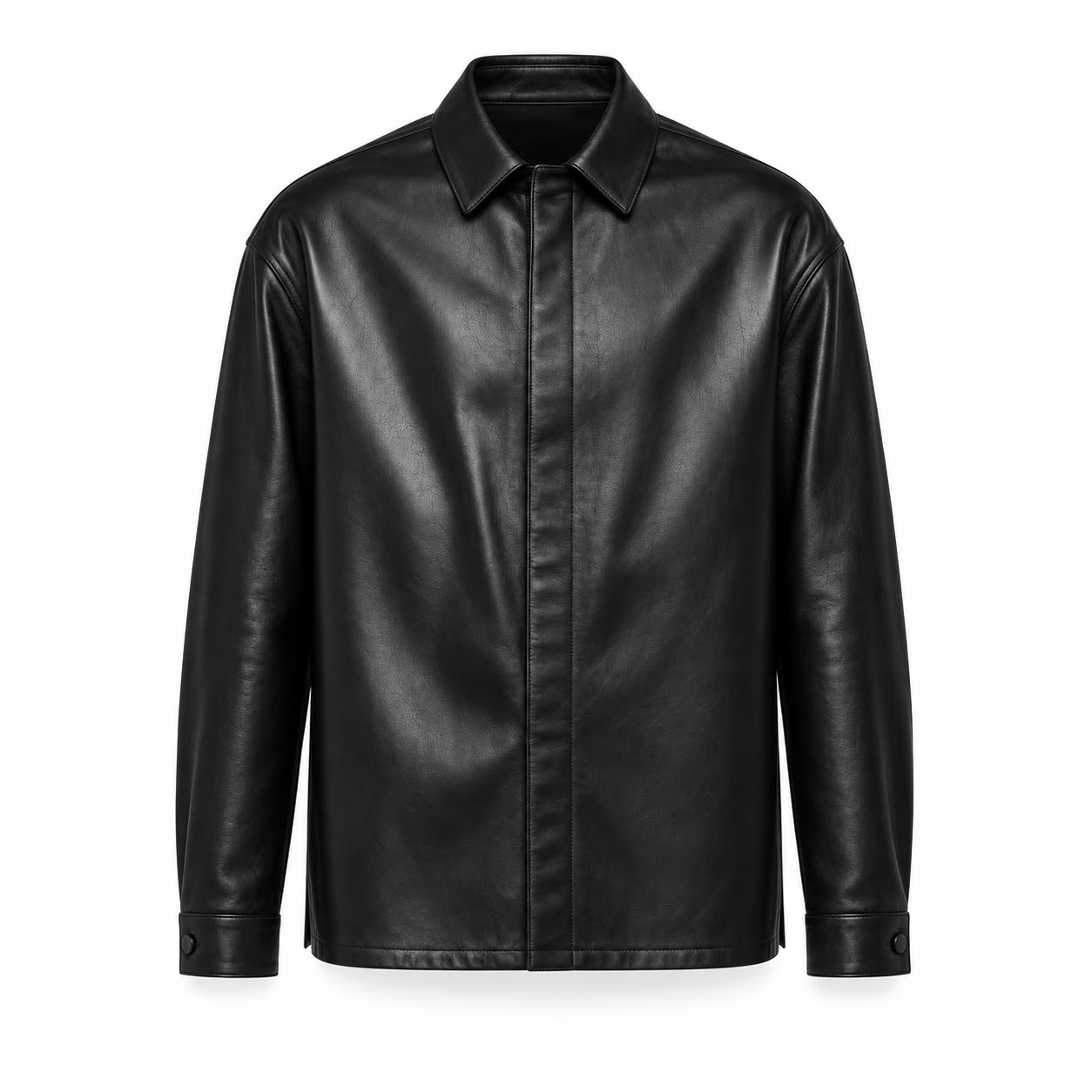
Concealed-Placket Leather Overshirt
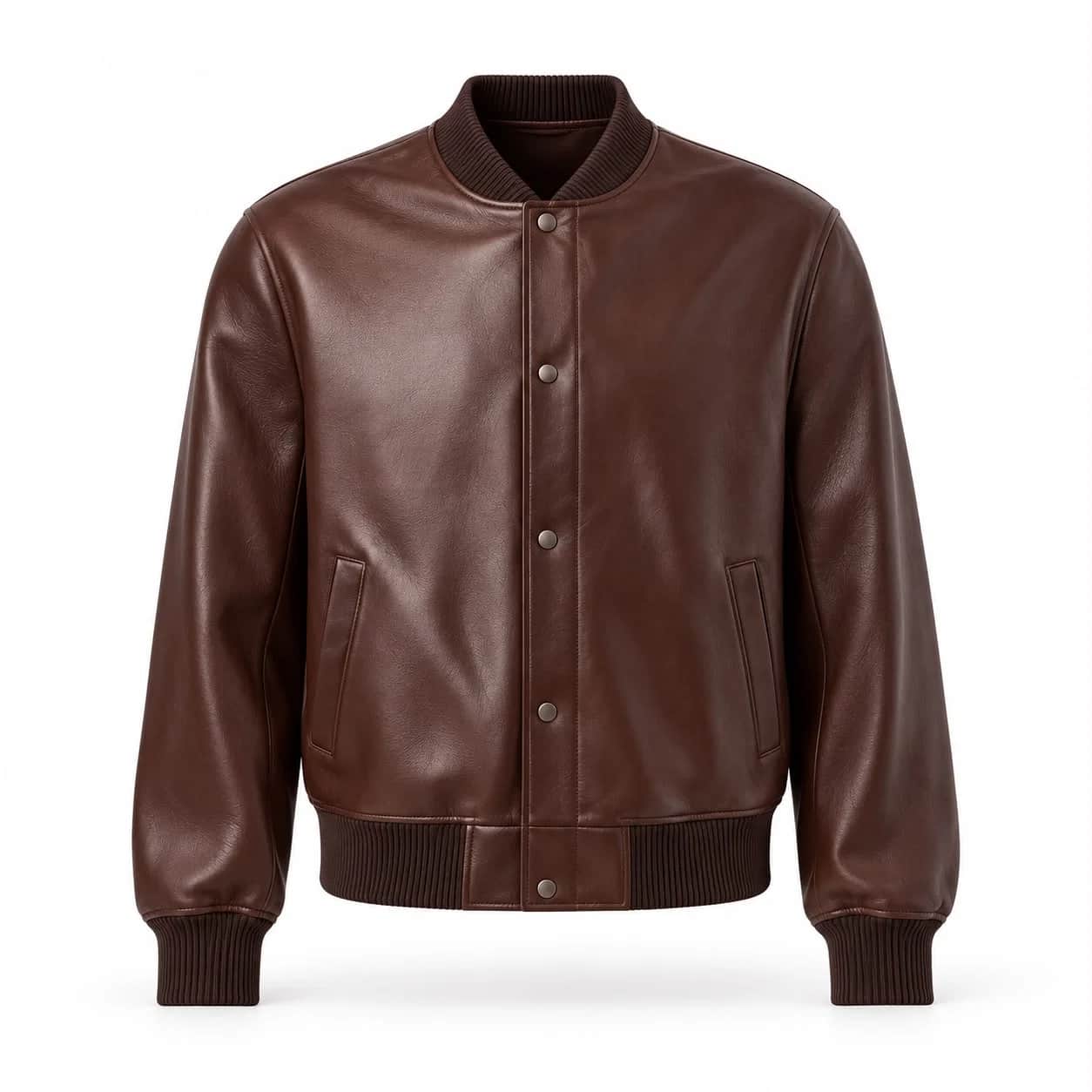
A relaxed-fit leather overshirt featuring a pointed collar, concealed front placket, and buttoned cuffs.
The same factories that produce for houses like Celine and Balenciaga can produce this piece, directly to you
GABI
Make it yours
Colour
- Main Fabric: 100% Leather, 800gsm
- lining: 100% Viscose
The leather overshirt sits between a shirt and a jacket: cut like something you button over a T-shirt, made from a material that usually means outerwear. In suede it reads relaxed and tactile; in smooth leather it reads sharp. Either way it needs lighter, softer hides than a jacket.
Between shirt and jacket
An overshirt keeps shirt details such as a shirt collar, button or snap placket, patch or welt pockets and a straight hem, but is worn as a light outer layer. Made in leather or suede it becomes a year-round piece that layers over tees and knitwear.
Construction logic
Overshirts use thinner, softer hides so collars roll and sleeves bend like cloth. Suede shows every mark from handling, so cutting and sewing need clean conditions. Pockets, plackets and cuffs are often reinforced, and many are left half-lined or unlined to stay light.
Commercial logic for creators
A leather or suede overshirt is an easier entry into leather than a full jacket: less hide, simpler patterns and a more casual price point. Earth tones such as tobacco, olive, stone and camel sell well in suede.
FAQ
Hang it away from heat, brush suede with a suede brush, avoid heavy rain, and use a specialist leather or suede cleaner.
Use LWG-rated tanneries where possible and keep restricted-substance testing on file. Leather apparel usually falls under HS 4203; confirm per item.
A leather garment factory with experience in lightweight hides and suede. Woven shirt factories are not set up for leather.
Leather type and thickness, panel map, lining (full, half or none), closure type, pocket specs, topstitch details and care labelling.
Affordable uses split suede or PU; premium uses soft lamb or goat leather; luxury uses top-grade hides with refined finishing and hardware.
Colour shading between panels, marked or crushed suede nap, stiff collars, uneven topstitching and loose snaps.
Colour consistency between panels, rub fastness on suede, snap and button pull strength, and seam strength at the shoulders and pockets.
Hide type and grade, how many panels and pockets there are, lining choice, snaps or buttons, and specialist labour.
Room to layer over a T-shirt or knit, shoulder and sleeve length, how the collar sits open and closed, and body length.
Collar shape and roll, placket and snap or button setting, pocket corners, cuff finishing and how the hem is turned.
Thin, soft lambskin or goatskin for smooth versions, and goat or calf suede for the softer, matte look. The leather must bend like cloth at the collar and elbows.
A shirt-shaped outer layer in leather or suede, with a shirt collar, button or snap front and shirt-style pockets, worn over a T-shirt or knit.