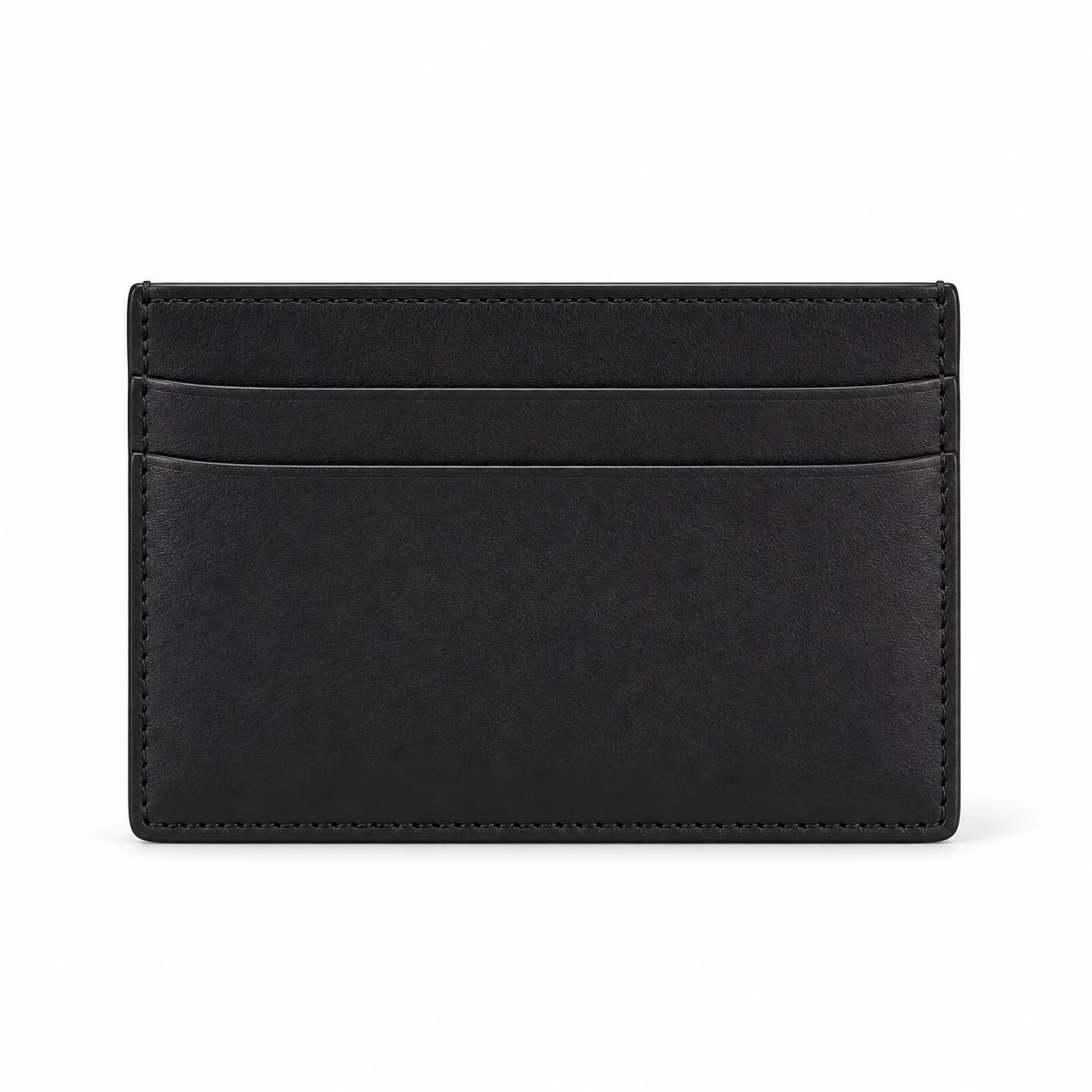
Smooth Slim Cardholder
Slim rectangular cardholder featuring two front card slots and a central compartment, finished with perimeter topstitching.
The same factories that produce for houses like Celine and Balenciaga can produce this piece, directly to you
GABI
Make it yours
Colour
- Main Fabric: 100% Leather, 800gsm
- Lining: 100% Recycled Polyester
Wallets, cardholders, key cases, coin pouches and wristlets are small, but they are handled every day. That makes edges, stitching and folds the whole product: a frayed edge or a stiff fold is noticed every time it comes out of a pocket.
Small piece, daily use
Small leather goods are opened, bent and rubbed many times a day. They need leather that ages well, folds that stay supple and card slots that keep their grip without stretching out.
Construction logic
Leather is thinned (skived) at folds and edges to reduce bulk. Edges are either painted and polished or turned and stitched. Zips, snaps, key hooks and wrist straps must be set firmly, and stitch spacing has to be even because every stitch is visible.
Commercial logic for creators
Small leather goods are the easiest way into leather for a brand: low material use, simple sizing, strong gifting appeal and a clear place for an embossed or debossed logo. A matching family (cardholder, wallet, key case) sells better than one-off pieces.
FAQ
Keep them away from heat and water, avoid overfilling, and condition smooth leather occasionally.
Use LWG-rated tanneries where possible and keep restricted-substance testing on file. Wallets and similar items usually fall under HS 4202; confirm per item.
Embossing or debossing is the classic choice; laser engraving and foil stamping also work, and personalised initials are popular for gifting.
Leather type and thickness, slot layout, dimensions open and closed, edge finish, stitch colour and spacing, hardware and logo placement.
Affordable uses split or bonded leather with painted edges; premium uses full-grain leather; luxury uses fine calf, hand-finished edges and branded hardware.
Cracked or peeling edge paint, bulky folds, uneven stitching, card slots that stretch out and loose snaps.
Rub and colourfastness, edge finish durability, zip and snap cycling, stitch strength and checks that the colour does not transfer to cards.
Leather grade, number of card slots and layers, hardware, edge finishing method and the amount of hand work.
That cards slide in and out easily but do not fall out, the piece closes flat when full, and it fits a pocket or bag compartment.
Skiving at folds, edge finishing (painted or turned), even stitch spacing, card slot tension, and firmly set zips, snaps and key hooks.
Full-grain cow or calf leather for durability, pebbled leather to hide scratches, and smooth leather for a sleek look. Thin, firm leather keeps pieces slim.
Wallets, cardholders, card pouches, key cases, coin pouches, snap pouches and wristlet organisers: small leather pieces carried every day.