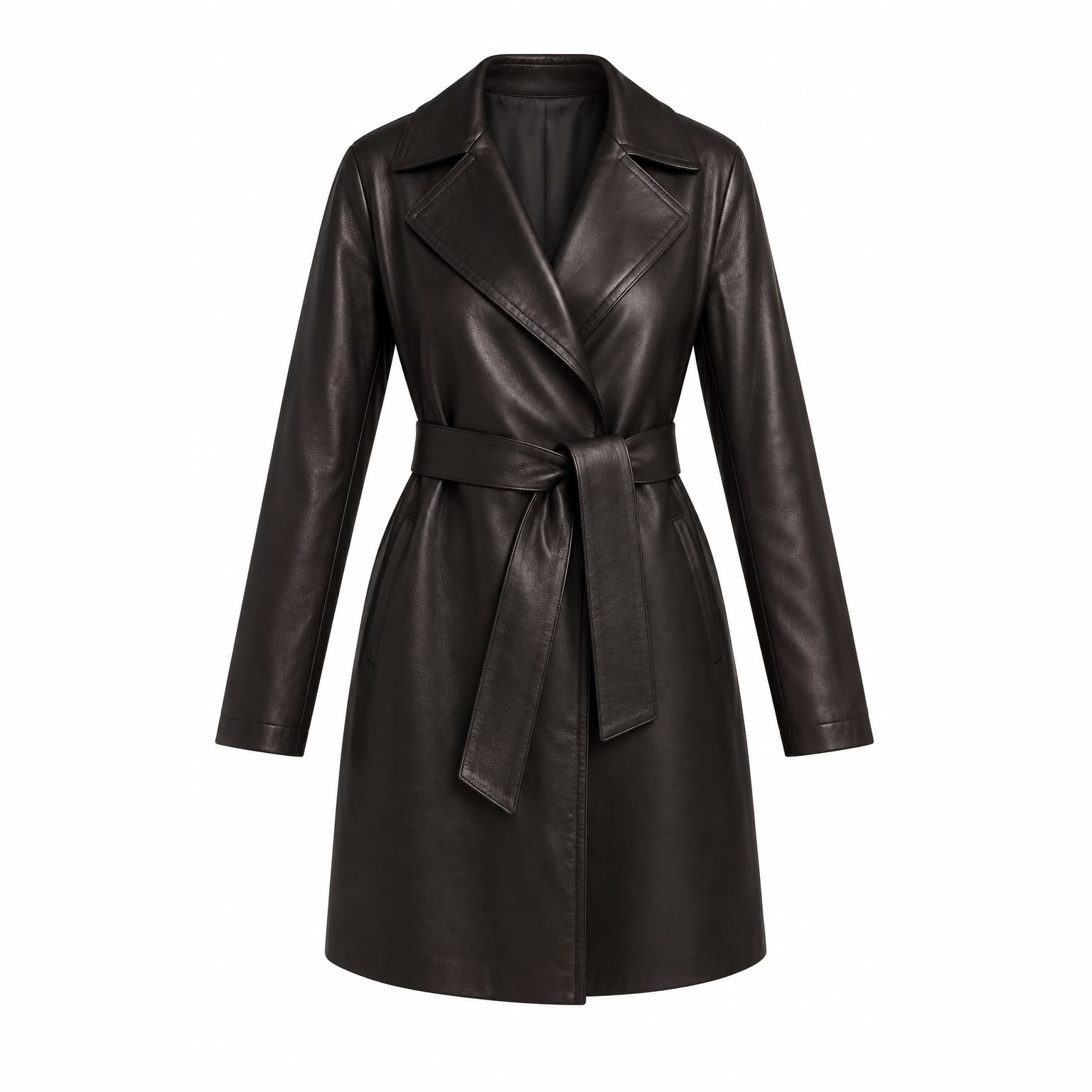
Tailored Leather Wrap Coat
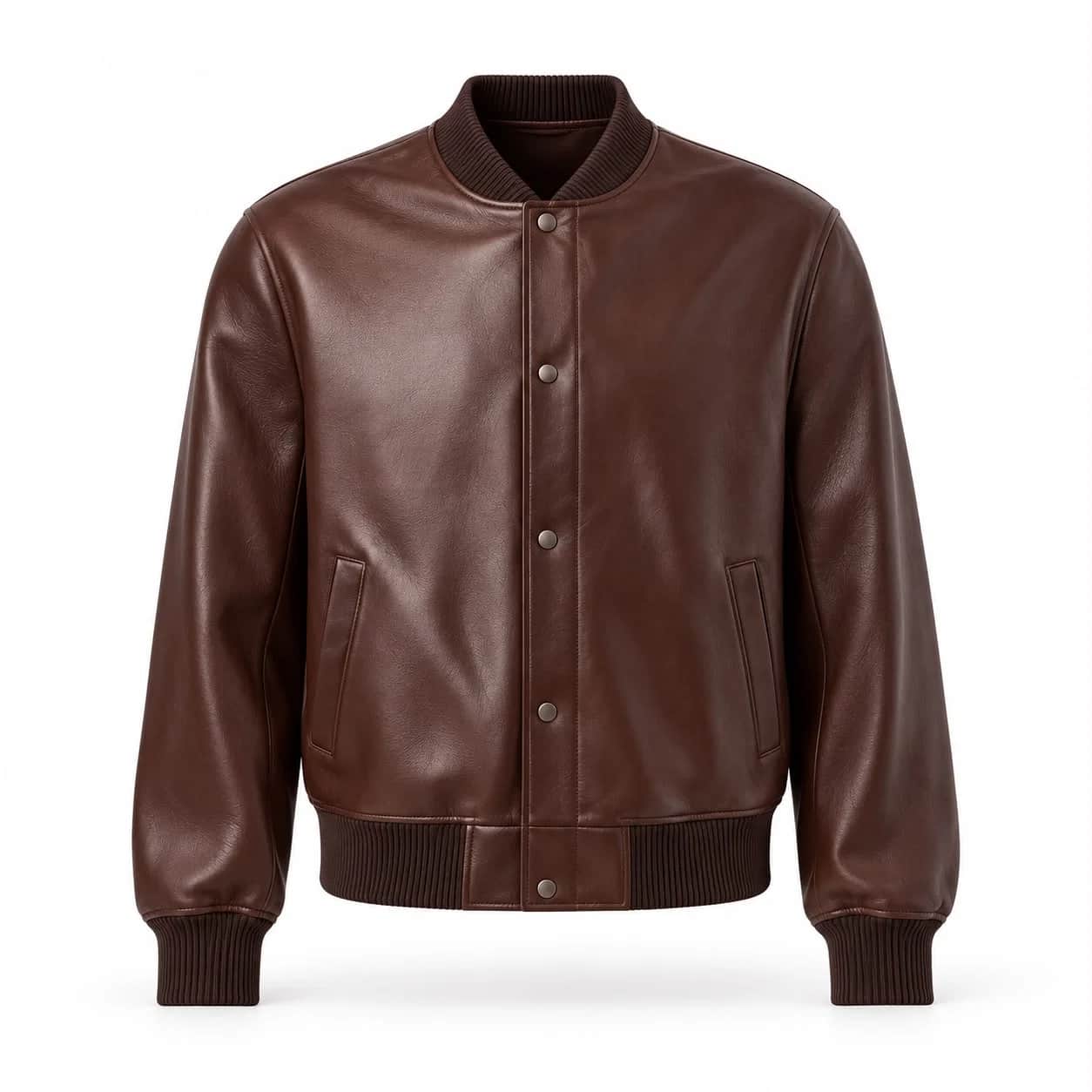
Tailored knee-length leather wrap coat featuring a wide notch lapel, self-tie belt, and side welt pockets.
The same factories that produce for houses like Celine and Balenciaga can produce this piece, directly to you
GABI
Make it yours
Colour
- Main Fabric: 100% Leather, 800gsm
- Lining: 100% Viscose
A leather coat uses more hide than almost any other garment, and it shows. Long panels, a lining that has to move over knitwear, and a belt or wrap that must hang straight: every extra centimetre of length raises both the risk and the reward.
Length is the challenge
A coat needs long, clean panels. Hides are irregular, so longer pieces mean more wastage and more careful matching of grain and colour across the fronts, back and sleeves. Wrap, cocoon, car-coat and belted shapes add facings, wide collars and belts that all need to sit flat.
Construction logic
Leather coats are cut panel by panel, with reinforced shoulder and armhole seams, a full lining so the coat slides over layers, and edges that are folded, painted or bound. Belts, buckles and buttons carry weight and must be set firmly. Needle holes stay visible, so stitching has to be right first time.
Commercial logic for creators
A leather coat is a statement, high-ticket piece. Suede reads softer and more relaxed; smooth lamb or cow leather reads sharper. Keep the colour range tight, sample carefully, and plan for longer lead times than woven outerwear.
FAQ
A leather coat is a hip- to ankle-length outer layer made from leather or suede, usually fully lined, in shapes such as trench, wrap, car coat, belted coat or cocoon.
Hang it on a wide hanger away from heat and direct sun, let it dry naturally if wet, condition smooth leather occasionally, and use a specialist cleaner for suede.
Use LWG-rated tanneries where possible and keep chrome VI and restricted-substance testing on file. Leather apparel usually falls under HS 4203; confirm per item.
A specialist leather outerwear factory. Standard woven factories do not have the cutting skills or machines for long leather panels.
Leather type and thickness, panel map, lining and interlining spec, hardware finish, belt and buckle details, seam allowances, and care labelling.
Affordable uses split leather or PU; premium uses lamb or cow leather with a good lining; luxury uses top hides, hand finishing and better hardware.
Mismatched panel colour or grain, visible scars on prominent panels, wavy seams, belts that twist, peeling finish and loose buttons.
Colour consistency across panels, rub and colourfastness of the finish, seam strength, button and buckle pull strength, and lining attachment.
Hide grade and the amount of hide used, lining, hardware, specialist labour and wastage from cutting long panels. Longer coats cost more because they need larger clean hides.
Shoulder width, sleeve length and pitch, room over knitwear, how the front and belt hang, collar roll, and length when walking and sitting.
Panel matching, reinforced shoulder and armhole seams, a smooth full lining, clean edge finishing, and firmly set belts, buckles and buttons.
Lambskin for softness and drape, cowhide for structure and durability, and suede for a softer, matte look. Choose by how the coat should hang and how much wear it will get.